

Fund the dreams that lead to breakthroughs.
Grant Recipients.
Each year, The Cancer League invests in pioneering cancer research and community-based programs that advance prevention, diagnosis, treatment, and patient care. Our 2025 grant recipients include leading scientists and organizations whose innovative work is bringing new hope to patients and families—from uncovering the molecular drivers of rare childhood cancers to developing next-generation immunotherapies and delivering vital support to those undergoing treatment.
2025 Research and Community Grants

Grant recipient: Dr. Raya Saab, Stanford University
2025 Award: $72,000
Rhabdomyosarcoma (RMS) is the most common soft-tissue cancer in children, and those with the fusion-positive form face especially poor outcomes. Dr. Raya Saab and her team are studying how a genetic driver called PAX3-FOXO1 influences the tumor’s microenvironment and immune response. By uncovering how this fusion gene communicates with surrounding cells to promote tumor growth and spread, the team aims to identify new molecular targets to slow or stop metastatic progression in this aggressive childhood cancer.
Investigating New Therapeutic Targets for Fusion-Positive Rhabdomyosarcoma.

Enhancing CAR-T Cell Therapy for Solid Tumors.
Grant recipient: Dr. Sneha Ramakrishna, Stanford University
2025 Award: $70,000
CAR-T cell therapies have revolutionized treatment for blood cancers, but have shown limited success against solid tumors. Dr. Sneha Ramakrishna’s research explores how immune cells called myeloid cells influence CAR-T effectiveness. By mapping how these myeloid cells either suppress or enhance CAR-T activity—and using CRISPR technology to engineer more resilient CAR-T cells—her team aims to unlock new treatment strategies that make immunotherapy more effective for patients with solid tumors.
Advancing “Off-the-Shelf” CAR-T Therapies for T-Cell Cancers.
Grant recipient: Dr. Melody Smith, Stanford University
2025 Award: $70,000
While CAR-T therapy has transformed care for B-cell cancers, there are still no comparable options for patients with T-cell malignancies, such as certain lymphomas and leukemias. Dr. Melody Smith’s research focuses on developing a universal, “off-the-shelf” CAR-T therapy that could be available immediately without the need for donor matching or lengthy cell engineering. This approach has the potential to bring lifesaving treatment to patients who cannot wait for personalized therapies and may eventually apply to other hard-to-treat cancers as well.

Personalizing Immunotherapy for Lung Cancer through T-Cell Assembloids.
Grant Recipients: Dr. Jonathan Roose, University of California, San Francisco
2025 Award: $70,000
Non-small cell lung cancer (NSCLC) remains one of the deadliest cancers, in part because the body’s immune T-cells often fail to recognize and attack tumor cells. Dr. Jonathan Roose and his team are creating 3D “assembloids” from patients’ actual tumor samples, which are miniature replicas that preserve the tumor’s complex cell environment. Using these models, they aim to pinpoint the rare T-cells capable of fighting NSCLC and engineer them for stronger, more precise immune responses. This innovative platform could pave the way for personalized T-cell therapies not only in lung cancer but also in melanoma, colon, and pancreatic cancers.

Mapping the Immune Landscape of Oral Precancerous Lesions.
Grant Recipients: Dr. Matthew Spitzer and Dr. Eddie Wai, University of California, San Francisco
2025 Award: $70,000
Head and neck cancers affect hundreds of thousands of people each year, and early detection is key to survival. Drs. Matthew Spitzer and Eddie Wai are studying how the immune system changes as oral tissue evolves from precancerous lesions to full carcinomas. By analyzing easily accessible mouth tissue samples, they aim to identify immune markers that predict which lesions will progress, and which will not. Their findings could guide less invasive, more personalized treatment decisions for oral cancer and inform early detection strategies across many cancer types.

Personalized Engineering of Cellular Cancer Immunotherapies.
Grant Recipient: Theodore Roth, Stanford University
2025 Award: $75,000
Directly engineering cancer patients’ immune cells offers the promise of targeting and overcoming the resistance mechanisms of cancers that respond poorly to systemic immunotherapy, and indeed have shown dramatic successes in some liquid tumors.
Delivering Nourishment to Cancer Patients and Caregivers.
Grant Recipient: Culinary Angels
2025 Award: $28,000
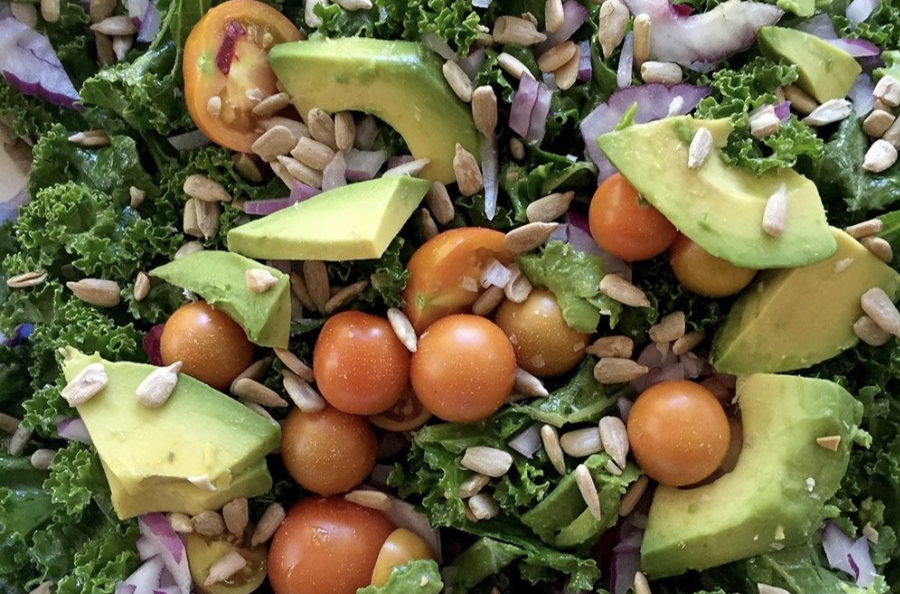
Culinary Angels provides free, organic, and medically tailored meals to individuals undergoing cancer treatment and their caregivers in the Tri-Valley region. The organization’s team of mostly volunteers prepares and delivers nutritious meals designed to support healing and improve quality of life. In addition to meal delivery, Culinary Angels offers education on the role of nutrition in cancer recovery, empowering patients and families with knowledge and care during treatment.
Past Research Grantees
2024 Recipients
Diane Barber, PhD and Justin Kollman, PhD, UCSF
Targeting mutant p53 as a cancer therapeutic
Karin Gaensler, MD, UCSF
Exploring the Bone Marrow Immune States in Acute Myeloid Leukemia (AML) using CITE-seq
Bridget Keenan, MD, PhD, UCSF
Investigating Viral-Specific T Cell and Myeloid Cell Interactions to Personalize Cancer Immunotherapy for Hepatocellular Carcinoma
Alex Marson, MD, UCSF
Leveraging in vivo CRISPR activating screens to improve CAR T cell therapies for solid tumors
Jennifer Rosenbluth, MD, PhD, UCSF
Advancing Immunotherapy Treatments for Inflammatory Breast Cancers
David Toczyski, PhD, UCSF
Selective activation of cell death in tumors of the nervous system
Jennifer Caswell-Jin, MD, UCSF
Immune biomarkers to predict treatment response in HER2-positive breast cancer
Rogelio Hernandez-Lopez, PhD, Stanford University
Next-generation antigen density sensing CAR T cells for solid tumors: A systematic discovery and perturbation approach
Tian Yi Zhang, MD, PhD, Stanford University
Inventing a noninvasive way to detect measurable residual disease (MRD) in acute myeloid leukemia (AML) using circulating tumor DNA (ctDNA)
Lisa McNaney, Founder and Executive Director, Culinary Angels
Preparing & Delivering 5 months of meals
2023 Recipients
Robert Goldsby, MD, UCSF
Mobile App to Help Survivors of Childhood Cancer Navigate Long-Term Follow-Up Care
Hugo Velozo Gonzalez, PhD, UCSF
Interrogating Cellular Crosstalk in Human Brain Metastasis
Elliot Steiglitz, MD, UCSF
Using the Immune System to Treat Infant Leukemia
Michael Rabow, MD, UCSF
Sustaining Cancer “Care Partners” Throughout Cancer Journey
Xiaolin Zhum, MD, PhD and Vadim Koshkin, MD, UCSF
HER2 Receptor Bladder and Urinary Tract
Alice C. Fan, MD, Stanford University
A Blood Cytokine Signature to Detect Early Response to Therapy
Rogelio Hernandez-Lopez, PhD, Stanford University
Next-generation antigen density sensing CAR T cells for solid tumors
Renumathy Dhanasekaran, MD, PhD, Stanford University
Developing Non-Invasive Biomarkers of Response to Immunotherapy in Liver Cancer
Irmina Anna Elliott, MD, Stanford University
Translation of Radioligand Therapy to the Spectrum of Thoracic Neuroendocrine Tumors
Erin Miller, Lazarex
CARE (Creating Access and Reimbursing Expenses) Program
Lisa McNaney, Culinary Angels
Meal Program
Shellie Campos, John Muir Health
Cancer Care via Transportation Services
Camp Okizu
General Support
Luanne Ridgely, Carol Ann Read Breast Center
Chemotherapy Care Packages
2022 Recipients
Robert Flavell, UCSF
Prostate Specific Membrane Antigen …to Treat Prostate Cancer
Alexander Marson, UCSF
Unlocking the Cancer-killing Capacity of T cells
Renumathy Dhanasekaran, MD, PhD, Stanford University
Peripheral Immune Predictors of Response to Immunotherapy in Liver Cancer
Tian Zhang, Stanford University
Inventing a Noninvasive Way to Detect minimal residual disease in AML using ctDNA
Suzanne Randall, Camp Okizu
General Operating Support
Lisa McNaney, Culinary Angels
Meal Program
Erin Miller, Lazarex
CARE (Creating Access and Reimbursing Expenses) Program
Ken Sommer, George Mark House
Cancer Care Program
WCRC Ann
Emergency Financial Assistance, Transportation Vouchers
2021 Recipients
Alex Marson, UCSF
Use of CRISPR technology to improve T cell-based immunotherapy cancer treatments
Monte Winslow, Stanford
Dissecting genotype-driven metastatic ability
Kelly Schoenbeck, UCSF
Evaluating TKI-associated cognitive dysfunction in patients with chronic myeloid leukemia (CML)
Jan Skotheim & Julien Sage, Stanford University
Developing a new cancer drug targeting the cyclin D-oncogene
Lazarex
Carol Ann Read Breast Center
Breast Health Program
Camp Okizu
Oncology Camp Program
2020 Recipients
Alice Bertaina, MD, PhD, Stanford University
CD8+ memory donor-derived addback after αβ T-cell haploidentical HSCT to reduce leukemia relapse in children
Paola Betancur, PhD. UCSF
Cracking the Code Linking Inflammation and the Cancer Immune Escape Program in Gynecologic Cancers
Michael Evans, PhD., UCSF
Precision Targeting of Iron for Pancreatic Cancer Imaging and Treatment
Dr. Deanna Kroetz, UCSF
Targeting MRP4-Mediated PGE2 Efflux to Improve Sensitivity to Immunotherapy
Prithvi Mruthyunjaya, MD, MHS, Stanford University
Proteomic analysis ofuveal melanoma reveals candidate diagnostic biomarkers
Dr. Melissa Reeves, UCSF
Spatial Dynamics of the Immune Response in Heterogeneous Tumors
Lisa Bailey, MD, FACS, Barry Siegel, BATI
Three NCI-Approved Immunotheraputic Clinical Trials for the Treatment of Patients in the East Bay with Advanced Forms of Melanoma
Camp Okizu
Oncology Camp Program
*Additional grantee information prior to 2020 is available upon request.